
EN
GENMA Maintenance · Hands-On | Cooler Cleaning: Dry Dust, Wet Dust, and Oily Dust Need Different Approaches
GENMA Maintenance · Hands-On | Cooler Cleaning: Dry Dust, Wet Dust, and Oily Dust Need Different Approaches
Oct 20, 2026
Hydraulic, water, and air coolers are key components for heat dissipation on GENMA machines. When cooler surfaces get dirty, cooling efficiency drops, oil temperature rises, and a series of problems can follow. But different types of dirt require different cleaning methods.
1. Three types of dirt, three methods
|
Dirt Type |
Cleaning Method |
Max Working Pressure |
|
Dry dust |
Clean with compressed air |
3–4 bar |
|
Wet dust |
Clean with a steam nozzle |
3–4 bar |
|
Oily dust |
Clean with a steam nozzle plus mild cleaning agent |
3–4 bar |
2. Points to note
· Keep pressure moderate — 3–4 bar is sufficient.
· For oily dust, use a mild cleaning agent, but avoid letting it enter the hydraulic system.
· After cleaning, check that the cooler surface is clean and the fins are not deformed.
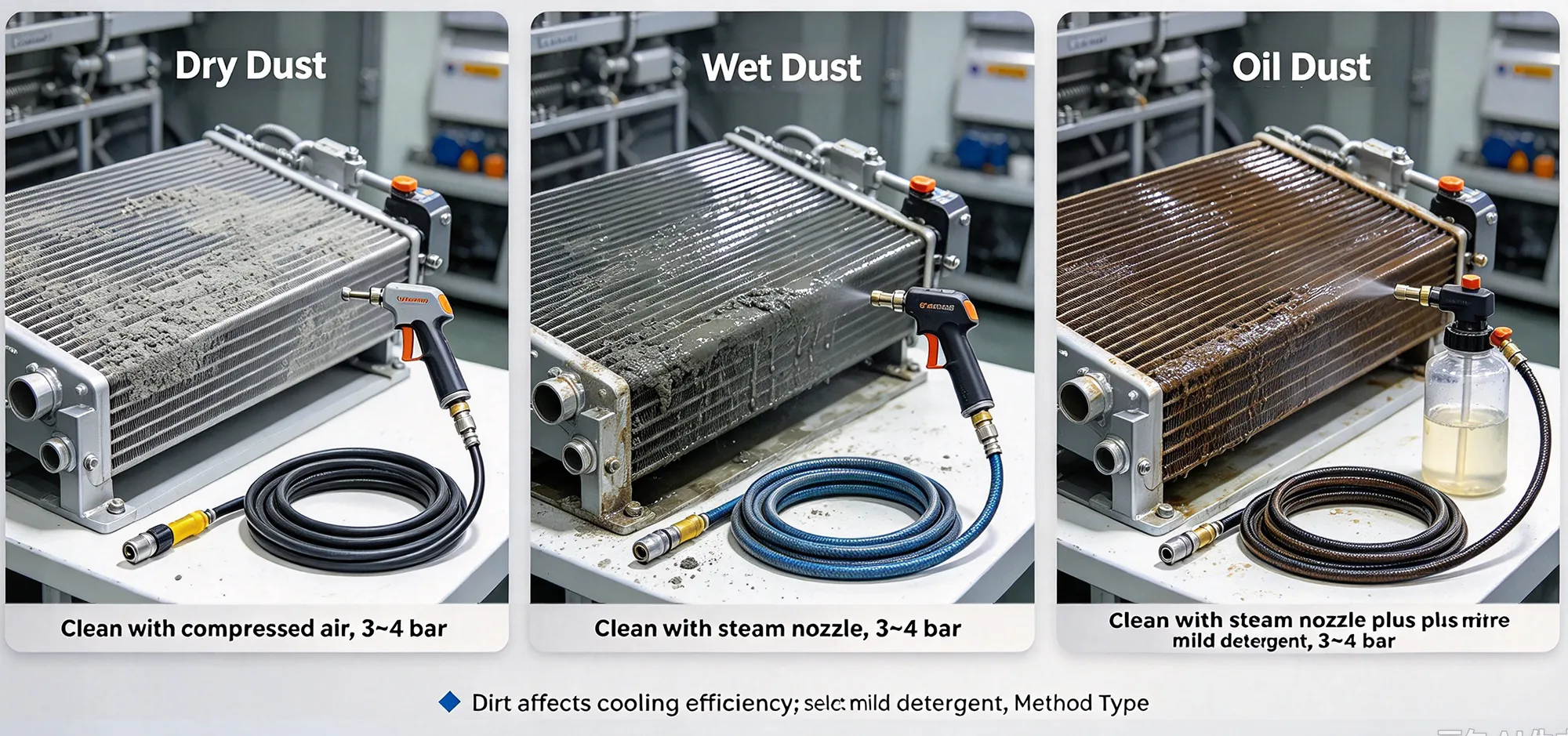
Rising oil temperature is an early warning sign of reduced cooler performance. If you notice abnormal oil temperature, check the cooler surface — and also watch for oil mist in the cooling air caused by external leakage in the heat exchanger. This can interrupt heat exchange and needs prompt attention.
Regular cooler cleaning is a basic task for keeping hydraulic system temperatures stable. Any questions? Feel free to reach out to your GENMA service engineer.

Recent Posts

October 26, 2016
The Most Successful Engineering Contractor
Oct 15, 2026
GENMA Delivers Transhipment System




Oct 12, 2026
TOC Asia 2026 | Meet GENMA in SingaporeContact US
Product Information
Quantity
Unit
Piece
Support order samples, customization, wholesale direct, and complete payment. If the product you look for does not have corresponding customized content, pls fill out the form below to contact us, and we will reply ASAP.