
EN
GENMA Maintenance · Parts Replacement & Lifecycle | Equipment Retirement: Recycling & Environmental Compliance
GENMA Maintenance · Parts Replacement & Lifecycle | Equipment Retirement: Recycling & Environmental Compliance
Sep 30, 2026
Every machine has a lifecycle. When your equipment reaches the end of its service life or is retired due to upgrades, disposal needs to comply with environmental regulations, parts recycling, and safe handling requirements. Here's what that involves.
1. Hazardous materials
-
Hydraulic oil, lubricants, coolant, etc. — collect, store, and dispose of them according to local environmental regulations.
-
Batteries — classified as hazardous waste; they must be handled by a licensed recycling facility.
-
Oily waste (filters, rags, etc.) — also requires compliant disposal.
2. Metal recycling
The main structure is steel and can be dismantled and sent to a metal recycling company. A few things to keep in mind:
-
Drain all fluids before dismantling.
-
Electrical components (cables, motors, etc.) should be recycled separately.
3. Safe dismantling
-
Release all hydraulic system pressure before dismantling.
-
Disconnect power to prevent accidental movement.
-
Use lifting equipment for large components — never stand underneath.
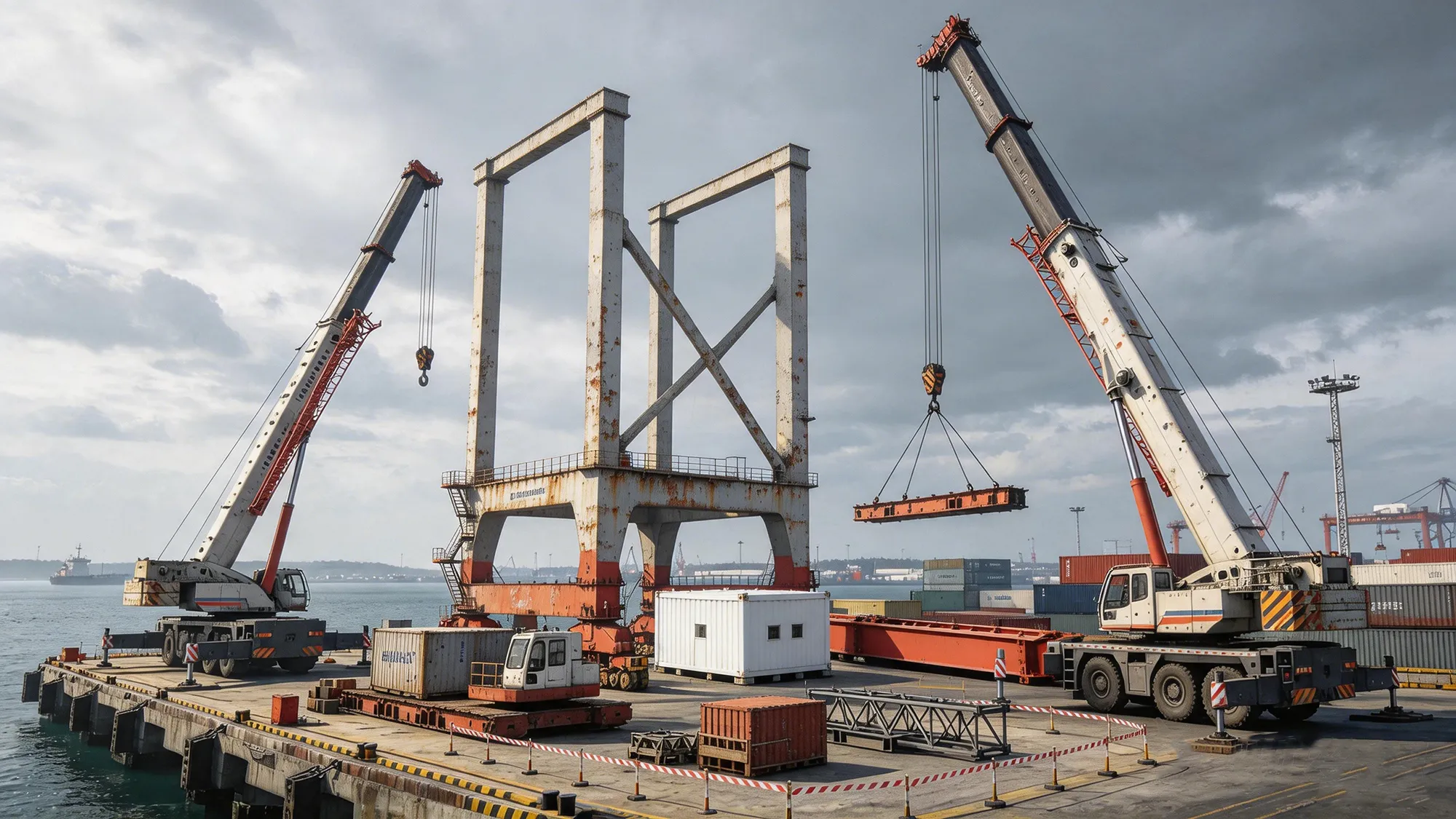
Retiring equipment isn't just about dismantling and walking away. Non-compliant disposal can lead to penalties and long-term environmental impact. We recommend contacting your local industrial waste disposal agency in advance to develop a compliant plan.
Need help planning your equipment retirement? Your GENMA service engineer is here to assist.

Recent Posts

October 26, 2016
The Most Successful Engineering Contractor
Sep 28, 2026
GENMA Completes 800t Gantry Crane Lift

Sep 22, 2026
GENMA Delivers 1,200t Shipbuilding Gantry Crane

Sep 18, 2026
Machines Can't Stop. That's My Job.Contact US
Product Information
Quantity
Unit
Piece
Support order samples, customization, wholesale direct, and complete payment. If the product you look for does not have corresponding customized content, pls fill out the form below to contact us, and we will reply ASAP.